
Article: How to Store Winter Clothes Over an Australian Summer
How to Store Winter Clothes Over an Australian Summer
Packing winter clothes away sounds like a solved problem. Fold, bag, shove somewhere, forget until May. Then you open the bag in autumn and find musty wool, insect damage or a down jacket that has lost its loft.
The failures are avoidable, but only if you store different materials differently.
Wash everything, even what looks clean
This is the step people skip.
Clothes moth larvae feed on animal fibres including wool and silk, and CSIRO notes that they can also feed on synthetic or blended fibres when those fabrics are stained with sweat or food. A jumper can look clean and still carry residue. Wash or dry-clean it according to its care label before storage.
Do not fold silverfish and clothes moths into one vague claim. They are different pests. The Western Australian Museum's conservation guide describes silverfish as a common pest in paper and textile collections, favouring dark, quiet and humid places and feeding on cellulose-based materials including paper, sizing, glue and cotton. That supports keeping storage clean and dry; it does not support claiming silverfish are especially prevalent across coastal Australia.
Dry completely
Moisture trapped in storage encourages mould. Follow the care label, dry every item completely and allow bulky garments extra airing time before packing. A garage or shed with dampness, leaks or large temperature swings is a poor place for textiles.
Compress the right things, not everything
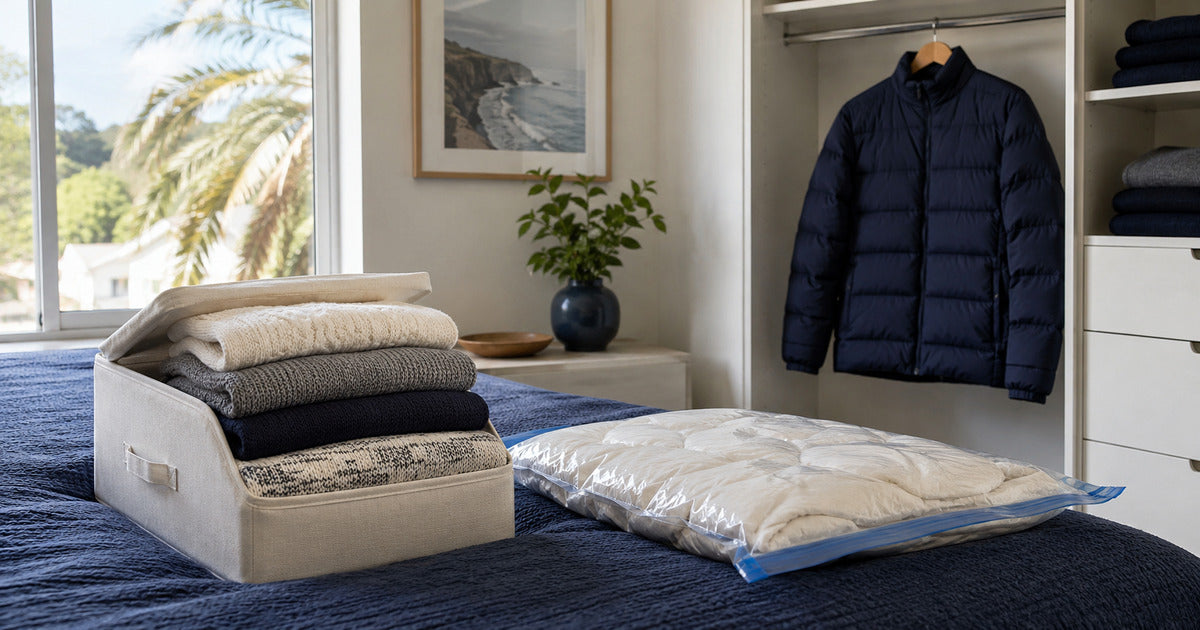
Vacuum storage bags are useful for suitable cotton and synthetic clothing, sheets, doona covers and some synthetic-filled bedding. Clean and dry everything first, keep sharp objects away from the bag, and follow the textile manufacturer's care instructions.
Do not store natural down under vacuum for long periods. Macpac advises storing down sleeping bags uncompressed to maintain loft and warns that long storage in a compression sack can crush the insulation. Sea to Summit gives the same practical direction: store sleeping bags uncompressed in a cool, dry place. That is a sound care rule; it is more accurate than claiming compression literally breaks every down cluster.
Also avoid vacuum-packing structured coats, wool suiting and leather. Use a container or garment cover that preserves the shape.
Choose a cool, dry and accessible place
Do not assume every top shelf is too hot or every under-bed space is cool. Check the actual location for heat, dampness and access. Under-bed boxes with clear windows can make seasonal items easier to identify, provided the area is dry and the box fits without scraping.
A sealed plastic container keeps pests out only if clean, dry and pest-free items went in. A breathable fabric box is not automatically safe in a humid room. The room conditions and the contents matter more than the marketing label.
Be cautious with mothballs
Do not add pesticides casually to a clothing box. Follow the label exactly and keep any pest-control product away from children and pets. Cleaning, inspection, dry storage and regular checks should come first.
Label and check
Write the contents and packing month on the outside. Check stored natural fibres during the season rather than leaving them untouched for six months. When autumn returns, air items and inspect seams, folds and the storage container before putting clothes back into the wardrobe.
Relevant storage is in Wardrobe & Bedroom. If space is the underlying problem, the renter storage guide covers options that do not depend on permanent alterations.
Frequently asked questions
Can I vacuum-pack a down jacket for summer?
Do not keep natural down compressed for long-term storage. Clean and dry it according to the care label, then store it uncompressed in a cool, dry place.
What clothes can go in vacuum storage bags?
Suitable cotton and synthetic clothing, sheets and some synthetic-filled bedding can usually be compressed if clean and completely dry. Always follow the item's care label.
How do I reduce insect damage in stored clothes?
Wash items before storage, dry them completely, inspect natural fibres, keep the storage area clean and dry, and check the contents periodically.
Are breathable boxes always better than plastic tubs?
No. Breathable boxes do not stop humidity or insects by themselves, while sealed tubs can trap existing moisture. Choose according to the room conditions and only pack clean, dry items.