Storage Ideas for Australian Renters (No Drilling, No Bond Lost)
Most storage advice on the internet assumes you own the walls. Install a floating shelf. Mount a pegboard. Screw a rail into the pantry door. Useful, unless your lease says otherwise.
In the 2021 Census, 30.6% of occupied private dwellings were rented. That is close to three in ten, but it is a dwelling statistic, not a claim that every renter faces the same rules.
Here is what actually works.
Doors are useful, but measure them
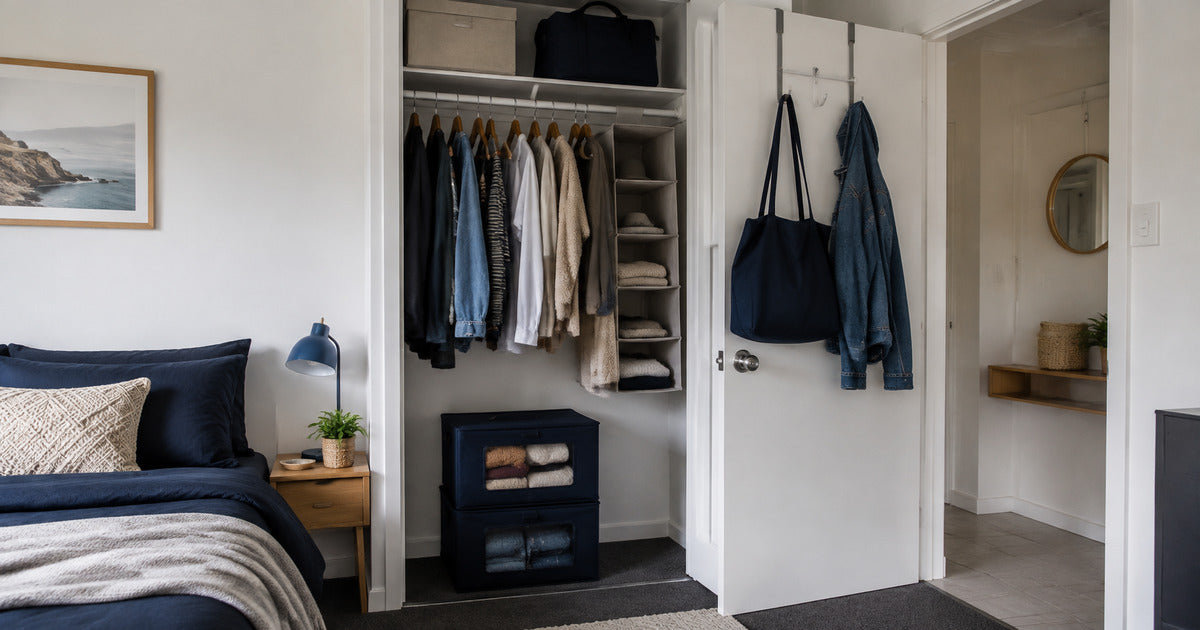
An internal door gives you vertical storage without using floor space. Over-door hardware hangs from the top edge, so it can work without drilling.
An over-door organiser rail can hold suitable lightweight coats, bags or towels. Check the door thickness, the clearance above it and whether the hooks interfere with closing. There is no single door thickness you should assume across Australian homes, especially after renovations or in older properties. Measure the actual door.
Adhesive can work, but the surface matters
Adhesive mounts need a smooth, clean and compatible surface. They are unreliable across grout lines, textured finishes, damp surfaces and paint that is already lifting.
Adhesive shower caddies may suit smooth tile or glass when installed exactly as instructed. Clean and dry the surface, observe the stated curing time, and do not exceed the product's instructions. Removal can still damage weak paint or finishes, so test cautiously.
Use the space under the bed properly
Under-bed space is useful because it requires no building alteration. The problem is retrieval: things go under there and disappear.
Boxes with clear windows let you identify the contents before pulling everything out. Measure the lowest bed-frame clearance, not just the mattress height, and allow room for the handle.
Compress only suitable textiles
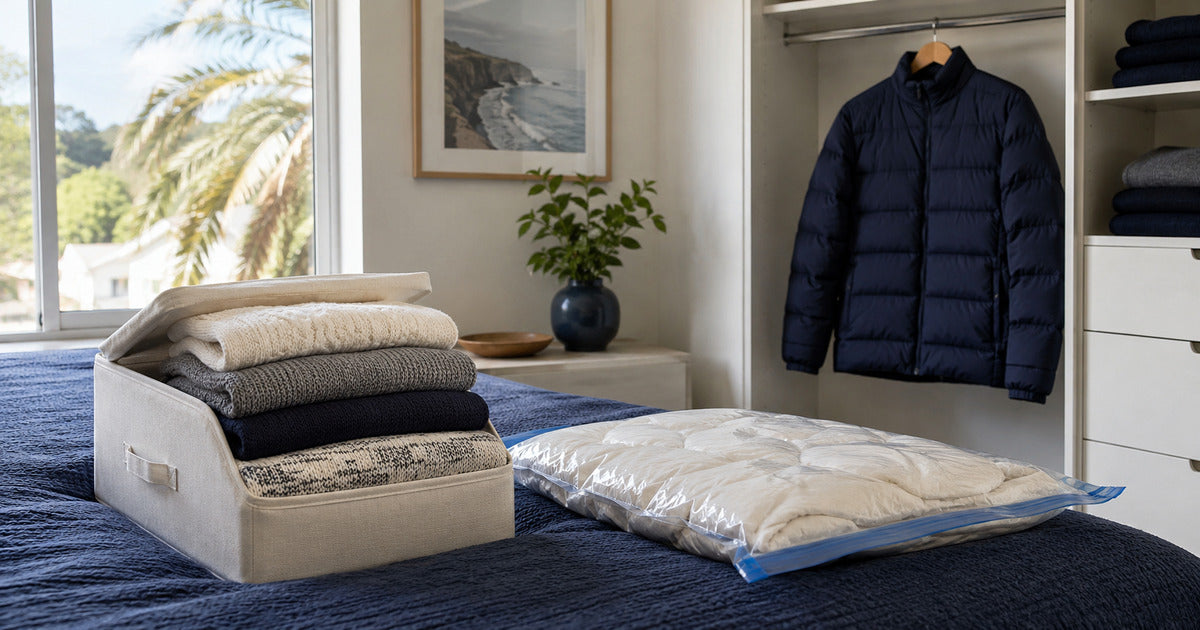
Vacuum storage bags can reduce the volume of suitable bedding and clothing. Everything must be clean and completely dry. Do not use long-term compression for natural down or structured garments; the storage guide below explains why.
Use slim hangers carefully
Bulky hangers consume rail space, but there is no honest universal percentage for how much a replacement set will save. Slim velvet hangers may create more room, depending on the hangers you replace and the clothes you own.
Check the rules before making changes
Rental rules vary by state, agreement and type of change. In Victoria, Consumer Affairs Victoria lists changes renters can make without permission and changes that require consent. NSW Fair Trading likewise says a change may be made if the lease allows it or the landlord gives written permission, while some minor changes cannot be unreasonably refused.
Do not rely on a blanket rule that all drilling is prohibited or permitted. Read your agreement, check your state authority and get written permission when required. Photograph existing marks at move-in and record the condition of any surface before attaching storage.
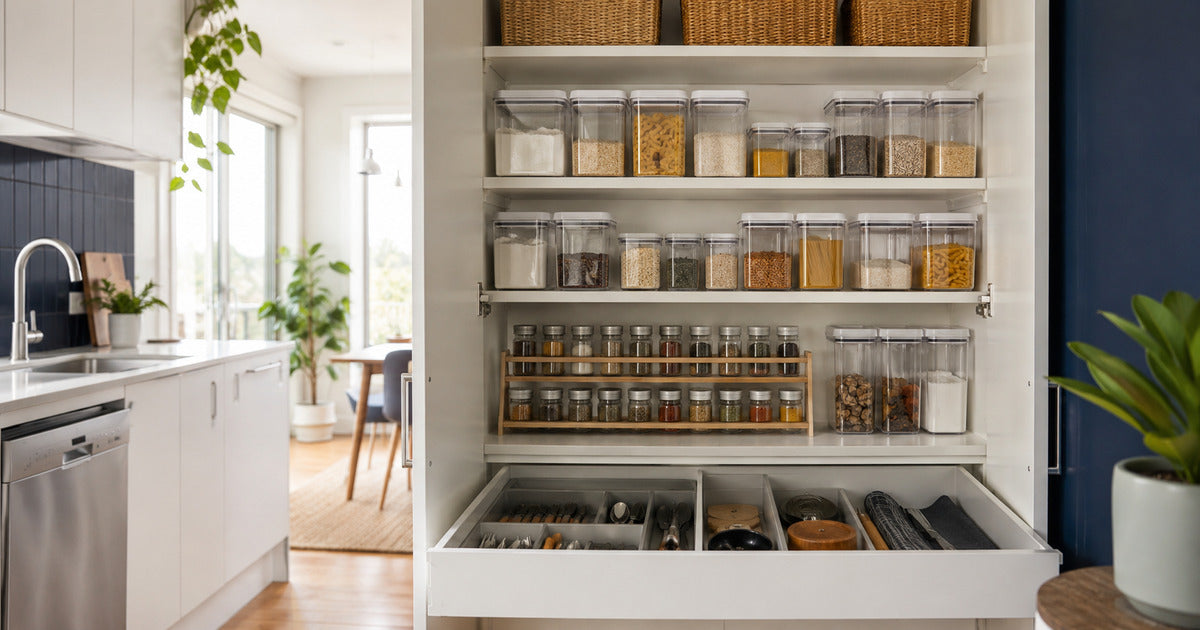
Relevant products are grouped in Wardrobe & Bedroom and Laundry & Bathroom. For kitchen-specific advice, read the small kitchen guide.
Frequently asked questions
Can a renter drill into a wall in Australia?
There is no single national answer. Check your lease and your state tenancy authority. Some minor changes are allowed without permission or cannot be unreasonably refused, while other alterations require written consent.
Do over-door hooks fit every internal door?
No. Measure the door thickness and the gap above it, then check that the door can still close without scraping the frame.
Can adhesive storage damage rental walls?
Yes. Adhesive can lift weak paint or fail on textured, damp or dirty surfaces. Use it only on a compatible finish, follow the curing instructions and test removal cautiously.
What is the safest no-drill storage for a bedroom?
Freestanding drawer inserts, under-bed boxes and suitable over-door storage avoid penetrating walls. Measure first and do not overload doors or furniture.